Cozy Corner
A mental health companion app that blends wellness gaming with real-time therapy support for young adults.
ROLE:
UX Designer
TIMELINE:
Sept - Nov 2025 (6 weeks)
Skills:
- User Research
- User Flows
- Interaction Design
- Visual Design
Tools:
- Figma
- Blender
- Photoshop
- Google Forms
OVERVIEW
Designing for mental wellness in moments that matter
I designed Cozy Corner for the University of Michigan Ross Business School's Business + Tech Innovation Jam, a six-week design challenge focused on creating innovative solutions for real-world problems. Our team of three tackled mental health accessibility for young adults by building an app that combines peer support, wellness mini-games, and on-demand therapy chat in one cohesive experience. I led user research, created the core user flow and visual design, and developed 3D assets to bring the app's home ecosystem to life.

THE PROBLEM
Young adults need mental health support right when they need it
Nearly 25% of adults in the U.S. experience mental health issues, yet accessing treatment in the moment remains nearly impossible. 60% of people say it's critical to find support right when they need it, not days or weeks later through appointments and paperwork.
Young adults face compounding barriers: long wait times, difficulty being vulnerable, and a desire for real human connection over AI chatbots. Existing wellness apps either gamify mental health without real clinical support, or provide therapy access but lack the engagement that keeps users coming back.
How might we create an accessible mental health app that integrates therapy seamlessly with engaging wellness activities?
USER RESEARCH
Surveying students to understand mental health pain points
The product manager and I co-led the research phase. We crafted a Google Form survey and distributed it across campus through word of mouth and student Discord servers. Our goal was to understand how young adults currently approach mental health support and what gaps exist in their experience.
Key Insights
After analyzing responses, we identified four critical pain points:
Need for human connection
“Availability of human resources. AI tools are always available
but have a lot of pitfalls.”
Hard to be vulnerable
“I find it's difficult to open up about struggles, even to the
people that I'm close to and know well.”
Long wait times
“I wish I didn't have to make an appointment or go through
paperwork to see a licensed professional and be anonymous.”
Barriers to accessibility
“Making it more accessible and bringing awareness so people know
about the resources.”
These insights confirmed our hypothesis: young adults need a solution that is immediate, human, low-barrier, and emotionally safe.
IDEATION
Defining core features through team brainstorming
With our research findings in hand, the team held brainstorming sessions to define what Cozy Corner would be. We knew we wanted to blend gaming with mental health support, but the challenge was figuring out how to make therapy feel natural within a game environment.
We landed on three core features:
- Social spaces: Meet and chat with other players for peer support
-
Wellness mini-games: Practice mental health
concepts through engaging, offline-capable games
- Therapy chat: Live chat with licensed professionals when users need immediate support
The Home Ecosystem Metaphor
The biggest design challenge was integrating therapy chat into the user flow without it feeling clinical or separate from the rest of the game. I was taking a course on cognitive psychology in human-computer interaction at the time, and we were learning about design metaphors. I realized that a home ecosystem could serve as the connective tissue for all our features.
Instead of treating therapy chat as a separate tab, I designed the user's avatar home as the central hub where every feature is accessible through intuitive, spatial interactions. Users could click on a computer to play mini-games, tap a large button to access therapy chat, and walk through a door to enter social spaces.
When I presented this concept during our first feedback round with mentors, one mentor challenged me to think deeper about how to make the therapy integration feel even more seamless. That conversation pushed me to refine the flow and consider user incentives.
DESIGN PROCESS
Early Sketches
I started with small sketches on sticky notes to quickly explore different layouts and flows. These sketches required constant back-and-forth with my team. I would create iterations, and the product manager and business analyst would provide feedback on possible tweaks or alternative approaches.
Mid-Fidelity Wireframes
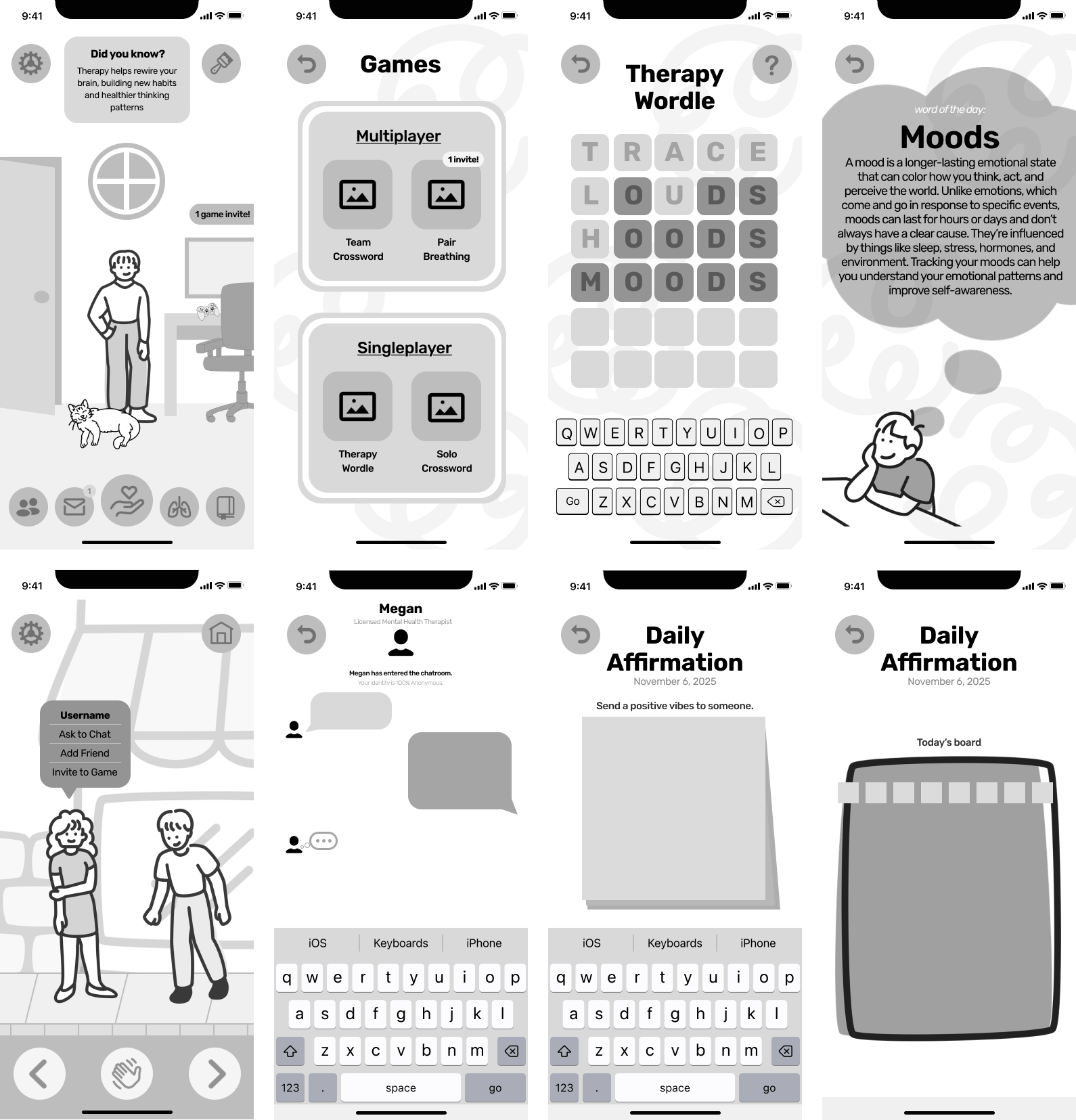
Once we had a clear direction, the product manager and I translated the sketches into mid-fidelity wireframes in Figma. At this stage, we focused on structure and user flow without worrying about visual polish.
User Flow
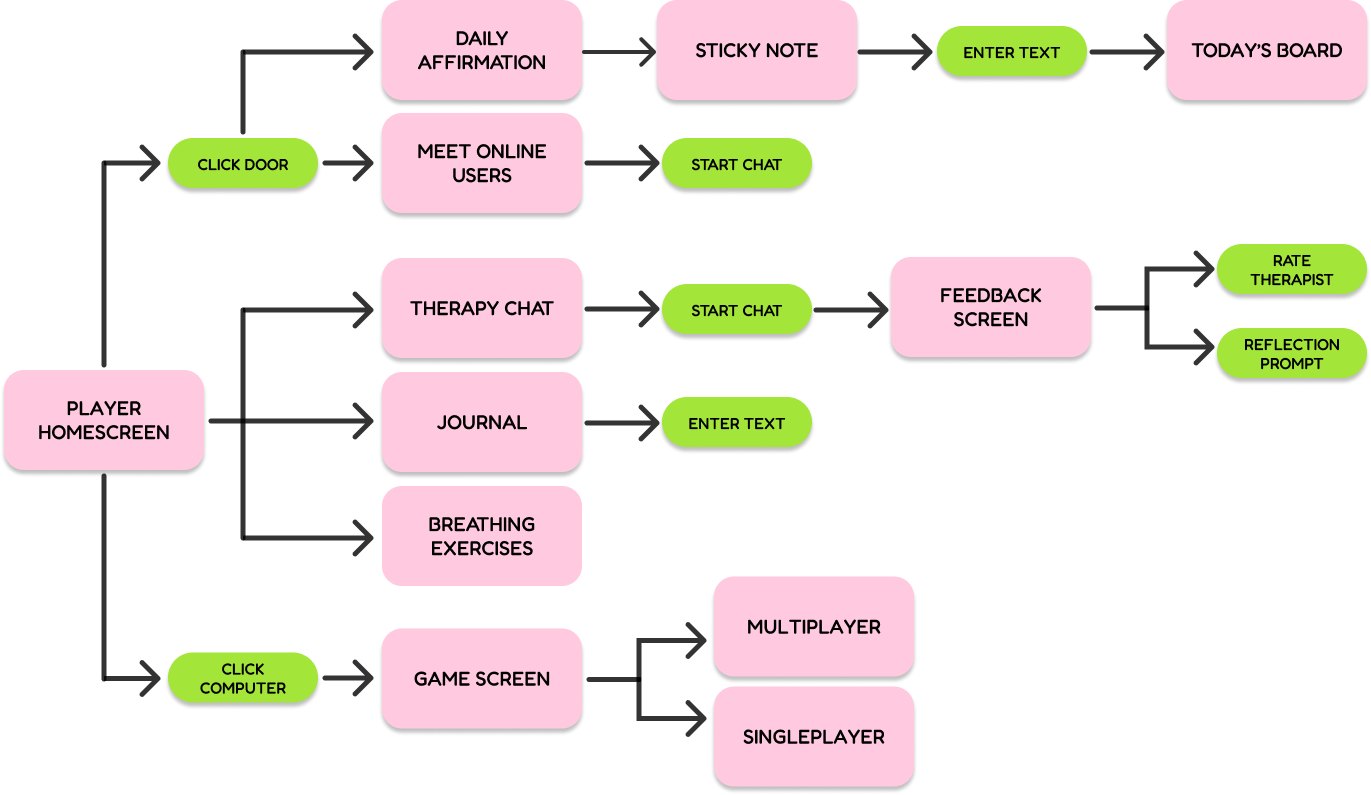
Next, I created a comprehensive user flow diagram in Figma to map out the basic path within Cozy Corner. This helped the team identify potential friction points and ensure seamless transitions, especially for the therapy chat integration.
Visual Design & Branding
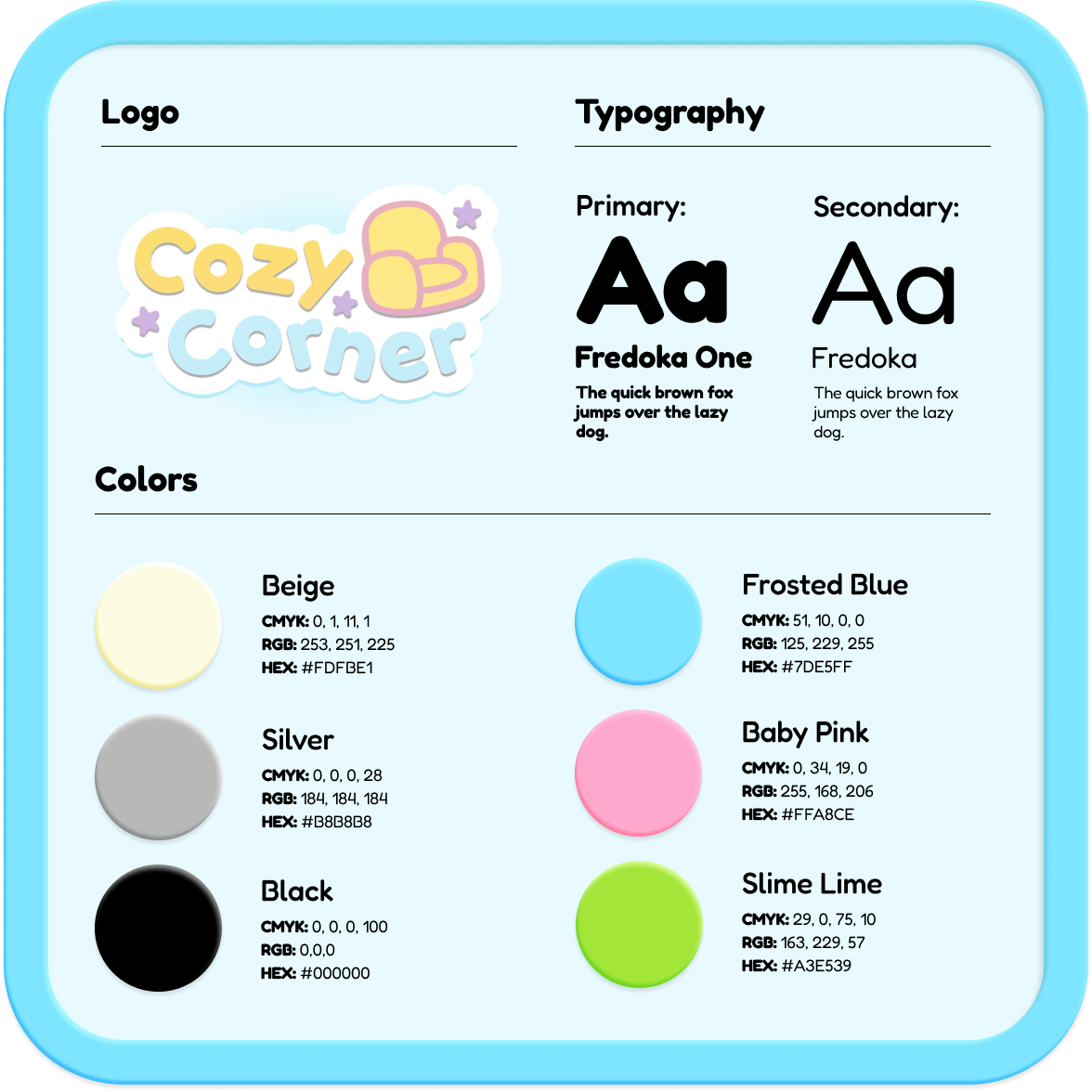
Before moving to high-fidelity, we developed a mini style guide with a color palette and mood board to define the vibe we wanted: warm, approachable, and calming. I also designed the Cozy Corner logo in Photoshop to establish brand identity early.
With the style direction locked in, I translated the wireframes into high-fidelity prototypes in Figma. I handled the majority of this work, though the product manager contributed feedback and refinements along the way.
3D Modeling
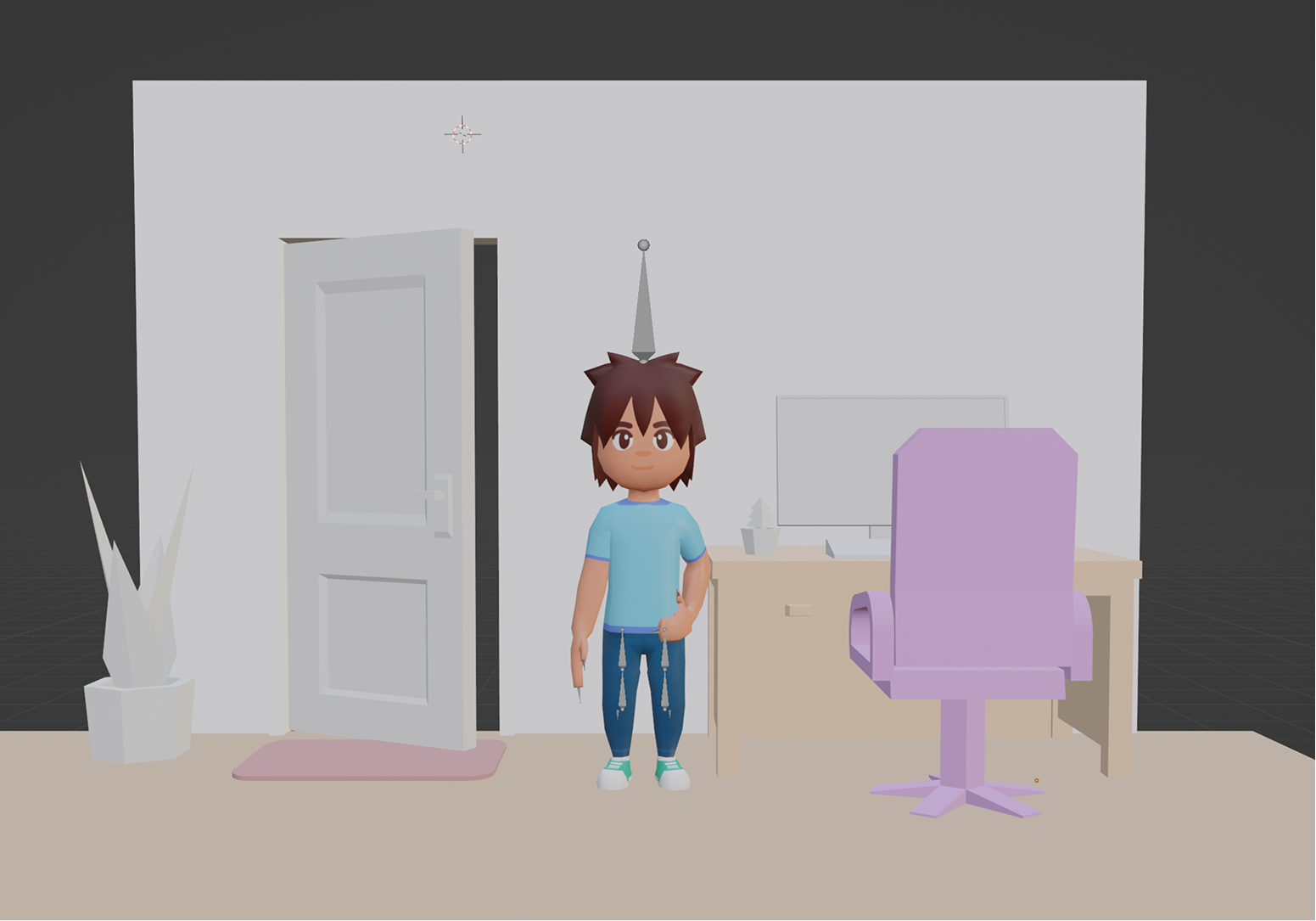
To bring the home ecosystem to life, I used Blender to create 3D models for the prototype, including the avatar's home and environmental elements. This added depth and immersion, making the interface feel more like a space users could inhabit.
ITERATION & USER TESTING
Refining based on mentor and judge feedback
Throughout the six-week jam, we received feedback from mentors and judges at multiple checkpoints. The most valuable feedback focused on the therapy chat integration and user flow.
Making Therapy Feel Seamless
Judges pointed out that while the home ecosystem was a strong concept, the transition from playing games to accessing therapy still felt slightly disjointed. They encouraged us to think about visual cues, transition animations, and contextual prompts that could guide users naturally into the therapy space.
User Incentives
Another piece of critical feedback was around user motivation. What would keep users engaged with the app long-term? This led us to introduce an in-game currency system. Users could earn currency by interacting with wellness mini-games, chatting with peers in social spaces, and using the therapy chat.
We decided that therapy chat would reward the most currency, subtly incentivizing users to engage with professional support while still making it feel like a natural part of the game loop.
FINAL DESIGNS
Home Ecosystem
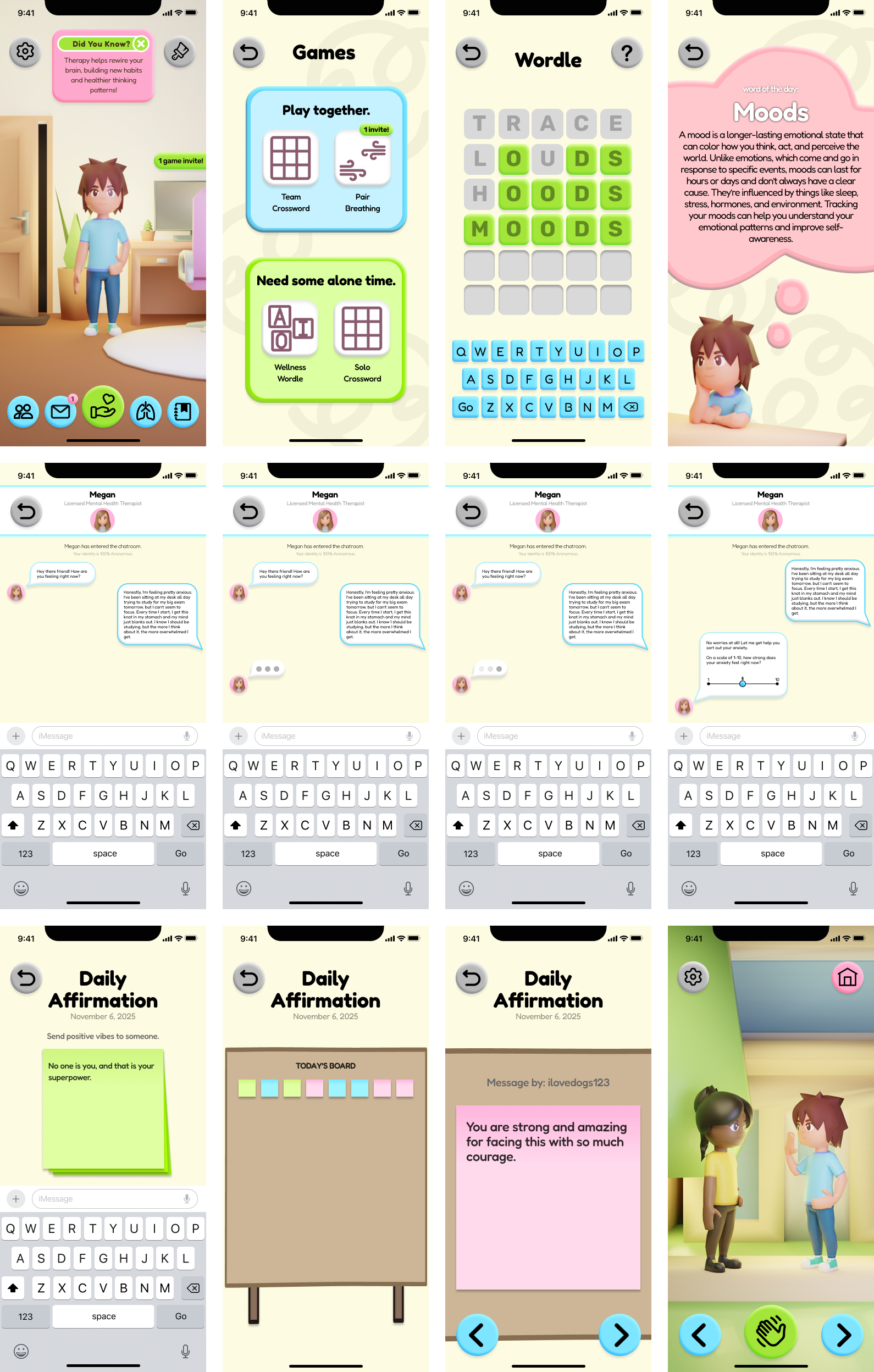
All features accessible from the user's avatar home through clickable elements like a computer for mini-games, a button for therapy chat, and a door for social spaces.
Therapy Chat Integration
Seamless access to licensed professionals with in-game currency rewards to encourage use.
Wellness Mini-Games
Offline-capable games that teach mental health concepts while earning customization rewards.
OUTCOMES
Advancing to the first round of judging
Out of 80 teams in the Business + Tech Innovation Jam, Cozy Corner advanced to the first round of judging, where 53 teams competed. While we didn't make it to the final five, the experience was invaluable.